


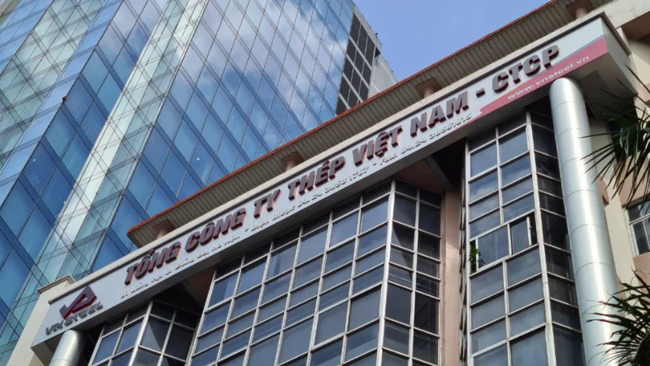
The steel industry maintains growth momentum amid cost pressures
According to information from the Domestic Market Steering Committee meeting in the first quarter of 2026 organized by the Ministry of Industry and Trade, steel industry records positive signals about production volume but is under heavy pressure from raw material costs and profit margins.
Representatives of Vietnam Steel Corporation said that domestic construction steel prices have tended to increase recently; however, adjustments remain lower than the changes in raw material prices on the global market. Price regulation is cautious to limit negative impacts on construction costs and project progress.
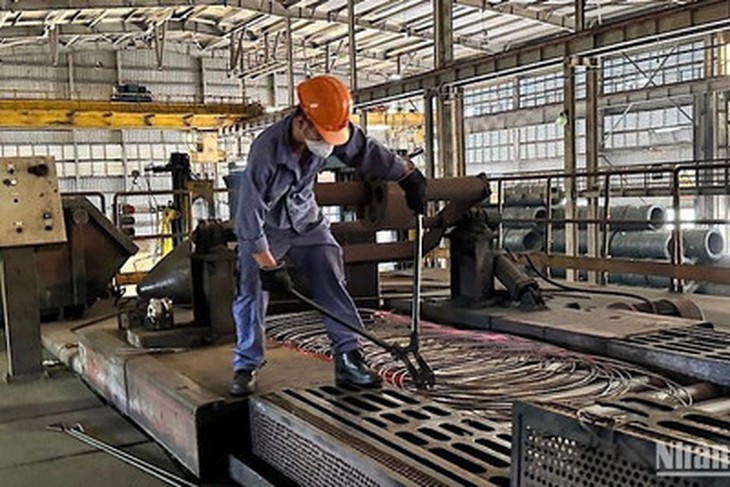
Compared to previous volatile periods, especially in 2022, current steel prices are maintained more stably, reflecting the efforts of enterprises to share difficulties with the market, despite input costs rising from 10 to 15%.
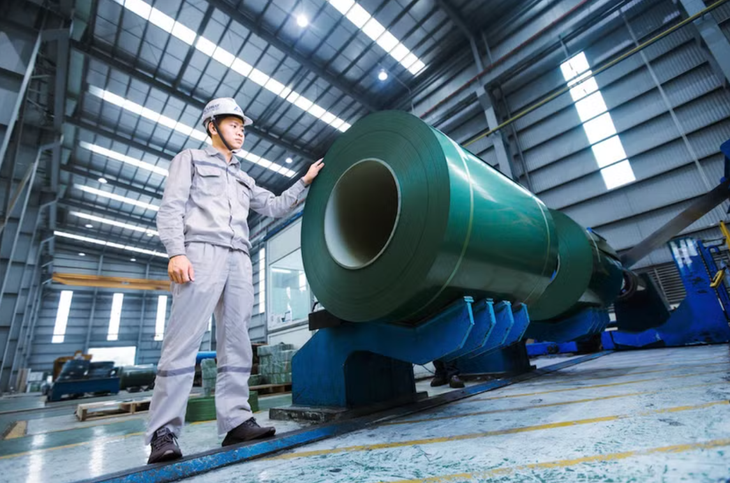
Color steel production line at Hoa Phat Group's factory. (Photo: Nguyen Nghi)
Notably, domestic construction steel consumption in March reached more than 1.3 million tons, the highest ever. This result shows that policies promoting public investment and infrastructure development are effective, creating an important momentum for the steel industry.
However, balancing selling price and profit remains a big challenge. Raising prices according to costs risks increasing total investment levels for projects.
Conversely, maintaining prices narrows enterprise profits. In this situation, many businesses have chosen to reasonably adjust prices while promoting cost reduction, improving management efficiency, and strengthening market share.
In the long term, completing the system of standards, technical regulations, and enhancing trade defense measures is considered necessary, contributing to protecting the domestic market and improving the competitiveness of Vietnam's steel industry in the international market.
The paper industry faces many challenges in market and supply
Unlike the growth momentum of the steel industry, the paper industry in the first quarter of 2026 was negatively impacted by the decline of the international market and disruptions in the raw material supply chain.
According to the Vietnam Pulp and Paper Association, paper output in the first three months reached about 1.7 million tons, down 6.8% compared to the same period last year. The main reason is decreased market demand while input costs continue to rise, forcing many businesses to reduce production.
Trade activities also recorded noticeable fluctuations. Paper imports reached about 711 thousand tons, while exports were only about 270 thousand tons, sharply down year-on-year. This reality indicates that enterprises tend to focus more on the domestic market to maintain operations.
Although domestic consumption slightly increased to about 2.12 million tons, it was still insufficient to offset the export decline. Additionally, the shrinkage of raw material order sizes and prolonged delivery times have increased logistics costs, affecting production plans and business efficiency of enterprises.
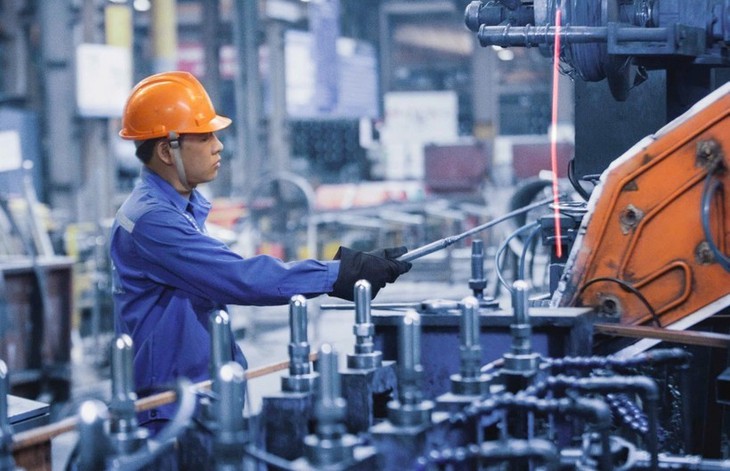
Production activities at Hoa Phat Steel Limited Liability Company, Hung Yen province.
In this situation, paper industry enterprises are proactively diversifying supply sources, strengthening negotiations with partners, and flexibly adjusting production plans to adapt to market fluctuations.
Strengthening policy support and removing difficulties for businesses
To support enterprises through this difficult period, industry associations propose synchronized solutions from management agencies. For the steel industry, it is necessary to continue strengthening trade defense measures, controlling the quality of imported goods, and supporting businesses in international disputes. At the same time, public investment will help maintain market demand stability.
For the paper industry, the top priority is ensuring a stable raw material supply by closely monitoring international market developments and supporting businesses in connecting new supply sources.
Moreover, controlling logistics costs, stabilizing energy prices, and facilitating access to capital are considered practical solutions to help businesses reduce cost pressures and gradually recover and develop sustainably.